COMPANY & BRAND
Why Choose Knox? A Practical Solar Buying Guide for Pakistan
Share on social media
Knox is worth considering when its specific inverter and battery models match your home's or business's power requirements. For Pakistani buyers, the strongest reasons to shortlist the brand are practical: a choice of system sizes, hybrid energy-management features and documented storage options. The final decision should come from the exact model, a properly designed installation and written support terms.
A choice of models for different projects
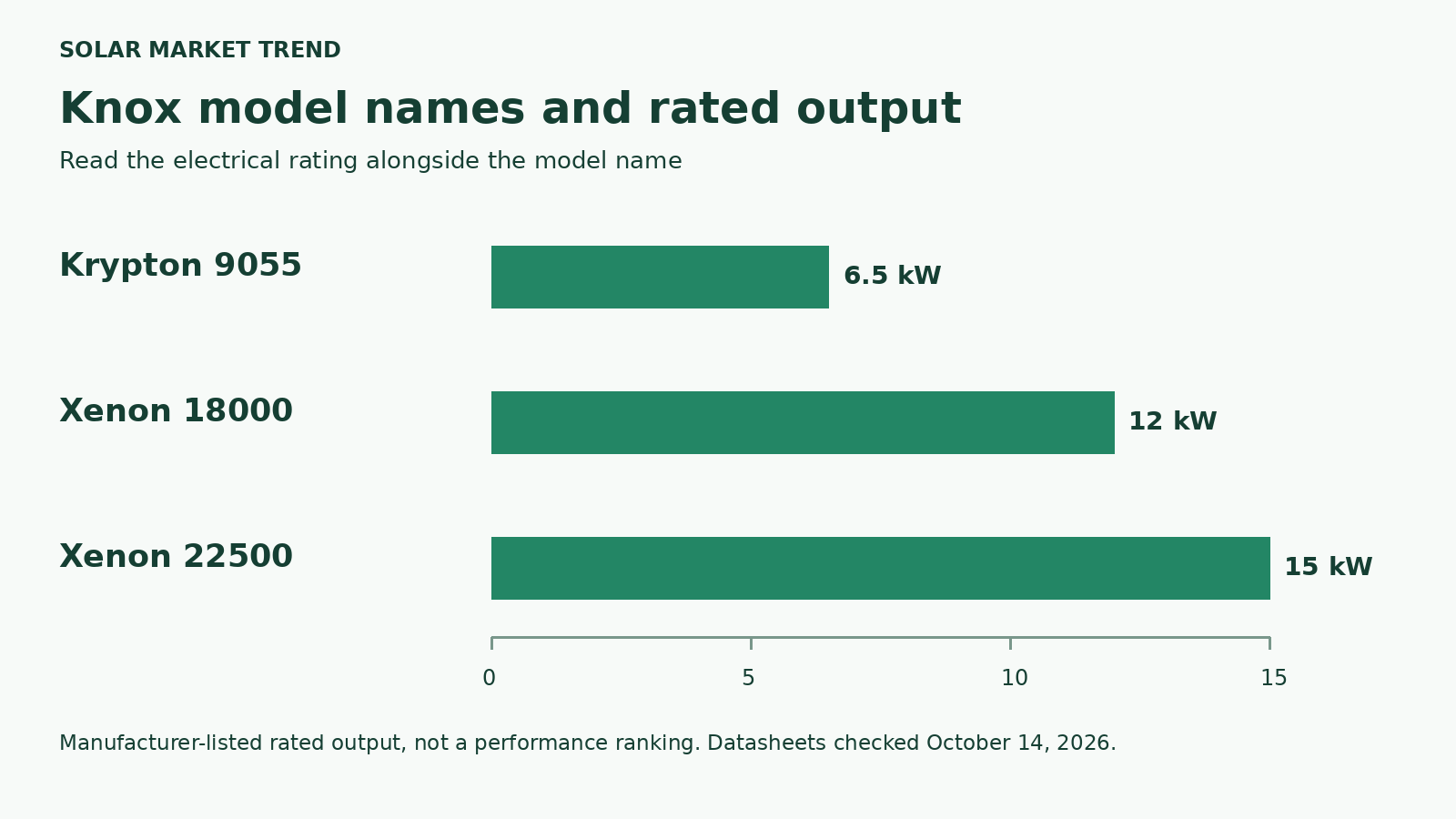
Knox's published specifications show why buyers should compare individual products. The Krypton 9055, model 6.5kW-48-pV9055-TWIN, is a single-phase inverter with 6,500W rated output and maximum PV input of 4,500W on each of two inputs. Its model number should therefore be read alongside the electrical ratings when discussing system size. Knox Krypton 9055 datasheet.
For larger three-phase requirements, the Xenon 18000 and Xenon 22500 datasheet lists rated outputs of 12kW and 15kW respectively, with maximum PV input of 18kW and 22.5kW. Both carry an IP66 enclosure rating in that document. This provides a useful starting point for customers seeking a larger hybrid system. Ask the installer to check the chosen model against the site's electrical supply, load profile and installation location. Knox Xenon 18000 and 22500 datasheet.
Useful controls for everyday operation
The Krypton 9055 datasheet lists dual MPPT, dual outputs for load management, built-in Wi-Fi monitoring, configurable AC/PV usage timing and prioritisation, and battery-independent operation. These are concrete features to discuss during a demonstration. Ask the installer to show how the settings will serve your daytime loads and which appliances will be connected to each output. Knox Krypton 9055 datasheet.
Make the intended operating scenario clear before buying. If outage backup is your priority, request a written design showing the supported loads, selected battery and expected runtime under stated assumptions. If daytime self-consumption is the priority, ask how the proposed configuration will follow your usage. Have grid-export arrangements checked separately for your connection.
Battery specifications you can examine
Knox also publishes a datasheet for the Powerwall 6.0, model LIO 5.20-IP20. It specifies LiFePO4 chemistry, 51.2V nominal voltage, 100Ah capacity and 5,120Wh of energy, equivalent to 5.12kWh. That energy rating is the useful figure when discussing storage capacity.
The document lists RS485, RS232 and CAN communication, and an IP20 enclosure rating. Ask for confirmation that the exact battery, inverter, firmware and communication cable are supported together. Have the installer specify a suitable mounting location and explain the usable energy allowance behind any backup estimate. Knox Powerwall 6.0 datasheet.
Choose the complete package
Before committing, request an itemised quotation with full model codes, installation scope, protective equipment, commissioning checks and after-sales contacts. Obtain the warranty document for each supplied product, including coverage, exclusions and the claim procedure. Keep those terms with the invoice and serial-number photographs.
Knox can make sense when these product features solve your actual requirements and the complete quotation is competitive. Use the manufacturer's specifications to build a shortlist, then judge the proposed system by its fit, installation quality and clearly documented support.
Ratings & comments
Published automatically. Everyone can read and join the discussion.
Discussion
Loading community posts…